Every customer gets an answer.
Agents answer the routine questions on chat, email and phone. Rules run the lookups. The rest reaches the right person with the whole thread.
Email“I was charged twice.”
Phone“Can I change my address?”
Chat“Where’s my order?”
Read
Routed




Decisions about money and policy.



The same steps, every time.




Reads the message and acts on it.
Address updated
Checked it hadn’t shipped, changed it, confirmed on the call.
The same questions, all day.
Where’s my order? Can I change my address? How do I reset my password? The routine questions arrive on every channel, all day, and the hard ones wait in the same line behind them.
Vendor report · AI resolution
76%
Average resolution rate reported by Fin across more than 12,000 customers.
Research · AI-assisted support
+15% More issues resolved per hour, on average, in a study of 5,172 support workers using an AI assistant.
Answered where it was asked.
Agents read every message, look up the order and the account, and reply on the channel it came in on. Rules run the steps that never change.
Agent
Reads the message and answers it.
- Order, delivery and return questions, from your order data
- Address, plan and booking changes, made in your systems
- Product and policy questions, from your own help articles
- Money, complaints and anything unusual, passed to your team
Rule
Runs the lookups and the follow-through.
- Tracking lookups and shipping updates
- Tags, priority and assignment in your helpdesk
- A confirmation once a change is made
- A follow-up after every closed ticket
Your channels. Your tools.
Agents and rules work inside the helpdesk and CRM your team already opens every morning. Nobody adopts a new dashboard.
Channels
- Chat
- Phone
- SMS
Wired into
- Helpdesk
- CRM
- Order system
- Billing
- Help center
From our work
For a telehealth operator, we built a customer-experience command center. Its agents answer order and delivery questions, switch plans, pick up intake forms left halfway, and flag billing problems to a senior manager with the whole thread.
What you get
Support that answers on every channel, maintained after launch.
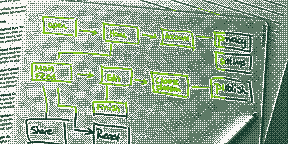
A prioritized opportunity analysis.
A prioritized analysis of support workflows, benefits, full costs, trade-offs, and estimated net present value, with a recommended starting point.
Wired into your helpdesk and CRM.
Agents and rules act inside the helpdesk, CRM, order and billing systems you already use, with credentials scoped to the task and revocable at any layer.
Maintained in production.
Policies change, products launch, tools update. Drift, failed handoffs and silent errors get caught on our side, and fixing them is our job.
Weekly review and tuning.
Every week we review the conversations that went wrong and fix them, so the answers keep getting better.
How it works
Audit, proposal, build, maintain
The same order every time, with a written proposal before we build.
Audit
We compare workflows your team already does well, weigh benefits, implementation and running costs, and trade-offs, then recommend where to start. You receive a prioritized opportunity analysis with assumptions and estimated net present value.
Scoped proposal
What we would build, which questions and channels it covers, what it connects to, and what we expect to change. Each step goes to an agent, a rule or a person, whichever does it best.
Built and connected
We build it, connect it to your helpdesk and CRM, and tune it to your policies and your tone of voice. Then we run it on real conversations until it holds up.
Maintain
We take on the long tail of maintenance engineering: tuning, fixes and updates as your products, policies and tools change. We help you set up an internal owner for your agentic workflows, or we keep owning them.
A few practical questions.
Will it fit how we work?
We already have a helpdesk. Do we have to switch?
No. Everything we build connects to the helpdesk you have today, so your team keeps the tools it knows.
Which channels can it answer on?
Chat, email, phone and SMS. Every answer goes back on the channel the customer used, and the whole conversation stays in one thread.
Our questions are pretty specific. Can an agent really answer them?
It answers from your own policies, help articles and order data, which we gather in the audit. Where the answer has to come out the same every time, a rule gives it.
What about the hard ones?
What happens when a customer is angry, or it’s about money?
The agent replies at once and flags it to your team by urgency, with the conversation and everything it already looked up attached.
What if it gets something wrong?
We review the conversations every week, find what went wrong and fix it in the instructions, the rule or the data behind it. That review is part of every engagement.
What am I paying for?
What actually happens in the audit?
We compare workflows your team already does well, weigh benefits, implementation and running costs, and trade-offs, then recommend where to start. You receive a prioritized opportunity analysis with assumptions and estimated net present value.
Okay, but what is this going to cost?
It is scoped and priced per engagement, because the work depends on how many channels and workflows are involved and how tangled they are. The audit produces the number.
Who looks after it once it’s live?
We do, for as long as you want, or an owner on your team that we train. Monitoring, correction and tuning are part of the engagement.